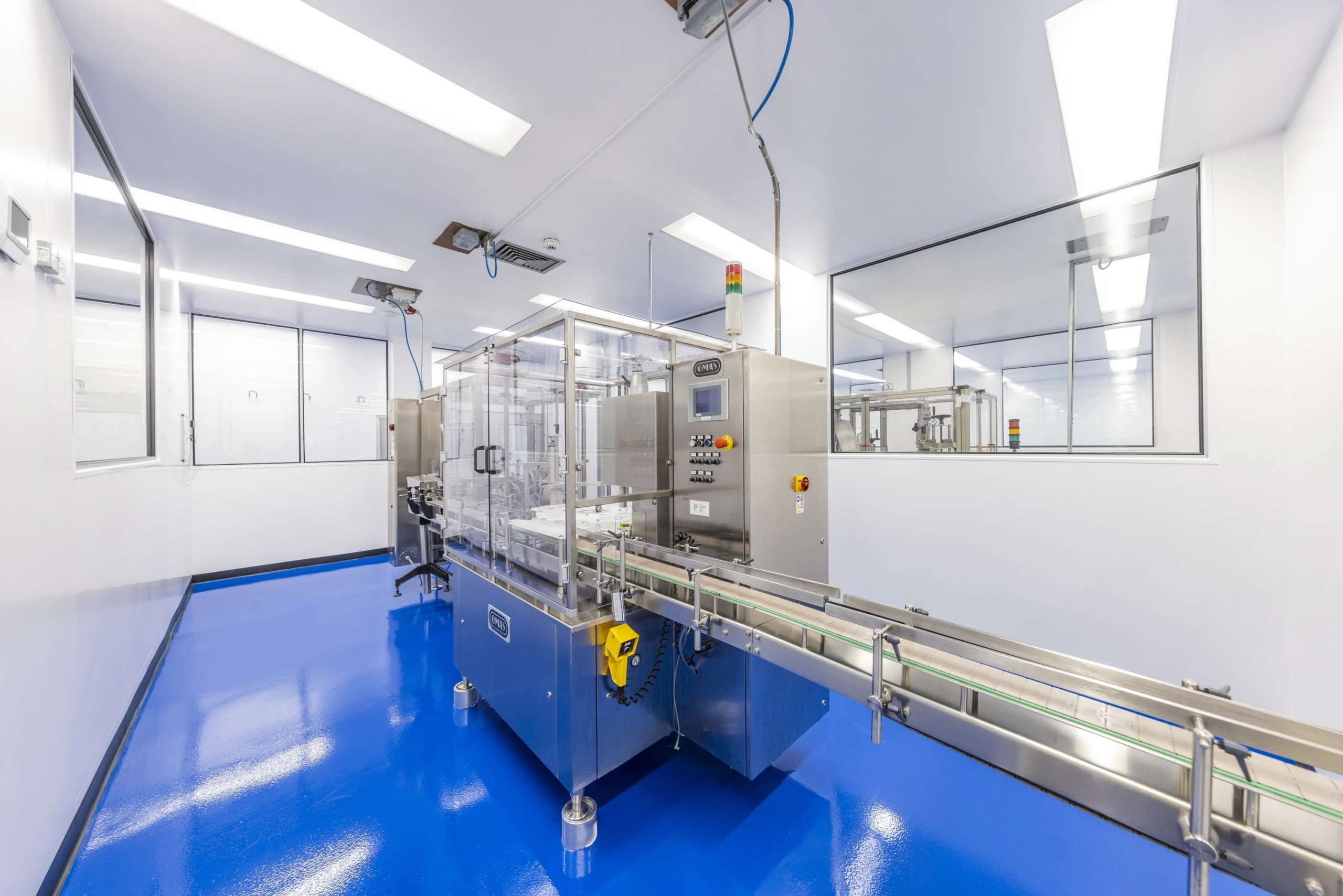
HEPA Filtration in Cleanrooms: What Project Teams Need to Know

When people think about cleanrooms, HEPA filters are often the first thing that comes to mind. They're a critical component of contamination control, helping to maintain the clean air required for regulated manufacturing and laboratory environments.

However, specifying HEPA filtration isn't simply a case of selecting a filter and installing it in the ceiling. To achieve the required cleanroom performance, HEPA filters must work as part of a carefully designed system that considers airflow, air change rates, pressure differentials, and the operational needs of the facility.

In this guide, we explain what project teams need to know about HEPA filtration and why early planning is essential to delivering a compliant, high-performing cleanroom.

What Is HEPA Filtration?

HEPA (High Efficiency Particulate Air) filters are designed to remove airborne particles before air enters the cleanroom. A true HEPA filter captures at least 99.97% of particles measuring 0.3 microns, making it highly effective at controlling airborne contamination.

HEPA filtration is used across a wide range of industries, including:

  • Pharmaceutical manufacturing
  • Biotechnology
  • Medical device production
  • Life sciences
  • Electronics manufacturing
  • Food and beverage
  • Aerospace

By continuously supplying highly filtered air, HEPA systems help maintain the cleanliness levels required for sensitive processes and regulatory compliance.

Why HEPA Filtration Is So Important

Airborne contamination is one of the biggest risks within a cleanroom environment. Dust, microorganisms and microscopic particles can all affect product quality, research integrity and manufacturing processes.

A well-designed HEPA filtration system helps to:

  • Maintain the required ISO cleanroom classification
  • Reduce the risk of product contamination
  • Protect sensitive manufacturing processes
  • Support GMP and regulatory compliance
  • Improve product consistency and quality
  • Create a safer working environment for personnel

Without effective filtration, even the best-designed cleanroom cannot consistently achieve its required performance.

HEPA Filters Are Only Part of the Solution

One of the biggest misconceptions is that installing HEPA filters automatically creates a compliant cleanroom.

In reality, filtration is only one element of the overall cleanroom design. The effectiveness of the filters depends on how they work alongside the wider HVAC system and the building itself.

Successful cleanroom performance also relies on:

  • Air change rates
  • Airflow patterns
  • Pressure differentials
  • Temperature and humidity control
  • Room layout
  • Airlocks and personnel flow
  • High-quality construction detailing

Each element plays an important role in maintaining contamination control throughout the facility.

Understanding Airflow

HEPA filters clean the air, but airflow determines how that clean air moves around the room.

Depending on the cleanroom application, designers will typically specify one of two airflow strategies.

Unidirectional (Laminar) Airflow

Used in higher-grade cleanrooms, unidirectional airflow moves clean air evenly in one direction, sweeping contaminants away from critical processes before they can settle.

Non-Unidirectional (Turbulent) Airflow

More commonly used in ISO Class 7 and ISO Class 8 cleanrooms, turbulent airflow mixes clean air throughout the room to dilute airborne particles while maintaining the required cleanliness level.

Selecting the correct airflow strategy is just as important as choosing the right filtration system.

Designing HEPA Filtration Around Your Process

Every cleanroom has different operational requirements, which means every filtration system should be designed around the process taking place inside the space.

Key questions during the design stage include:

  • What ISO classification is required?
  • What products or processes will take place?
  • How many people will occupy the room?
  • Is unidirectional airflow required?
  • What air change rates are needed?
  • How will filters be accessed for maintenance?
  • How will the system be tested and validated?

Answering these questions early helps ensure the cleanroom performs efficiently throughout its lifecycle.

Maintenance Matters

HEPA filters require ongoing inspection and testing to ensure they continue performing as intended.

Routine maintenance typically includes:

  • Filter integrity testing
  • Monitoring pressure drops
  • Regular validation
  • Planned filter replacement
  • Inspection of seals and housing systems

Planning for maintenance during the design stage makes future servicing quicker, safer and less disruptive.

Common Mistakes to Avoid

Several common issues can impact cleanroom performance if not considered early enough.

These include:

  • Selecting the wrong filter grade
  • Poor airflow balancing
  • Insufficient maintenance access
  • Incorrect air change calculations
  • Overlooking future validation requirements
  • Treating filtration as an isolated component rather than part of the overall cleanroom system

Working with experienced cleanroom specialists helps avoid these issues and reduces costly design changes later in the project.

How ParkLaine Supports Cleanroom Projects

At ParkLaine, we design and deliver cleanroom environments where every element works together to achieve the required level of cleanliness, compliance and operational performance.

Rather than simply specifying HEPA filters, we consider the complete mechanical and architectural design, ensuring filtration integrates seamlessly with airflow, HVAC systems, room layouts and operational requirements.

By taking a holistic approach from the outset, we help clients create cleanrooms that are efficient, compliant and built for long-term performance.

Planning a New Cleanroom or Refurbishment?

Whether you're building a new cleanroom or upgrading an existing facility, understanding how HEPA filtration fits into the wider design is essential for achieving reliable performance and regulatory compliance.

If you're planning a cleanroom project, our team can help you develop a solution tailored to your process, operational requirements and future growth.

Have a project in mind?

From future-ready workspaces to technically complex laboratories, ParkLaine delivers interiors engineered for excellence. Tell us about your next project and our team will be in touch to explore how we can support you.

Logo icon